

Applications - Civil Engineering
Roads
In the civil engineering field, GFRP rebar is an innovative reinforcement material that significantly reduces maintenance costs while extending the service life of structures through its superior corrosion resistance and durability.
Anti-corrosion
100%
Costs
50%
Lightweight, high-strength reinforcement without corrosion! GFRP, the standard for future roads.
40 %
Life Cycle
Maintenance
Maintenance
2 X
Increased
durability
durability
Key Points
1. Why GFRP for roads?
- Steel corrosion in de-icing and salt environments → cracking, delamination, and increased maintenance.
- Non-metallic reinforcement is necessary for future infrastructure such as bridges, coasts, and smart roads.
- The only alternative to eliminating corrosion = GFRP rebar.

Coastal and wetland roads
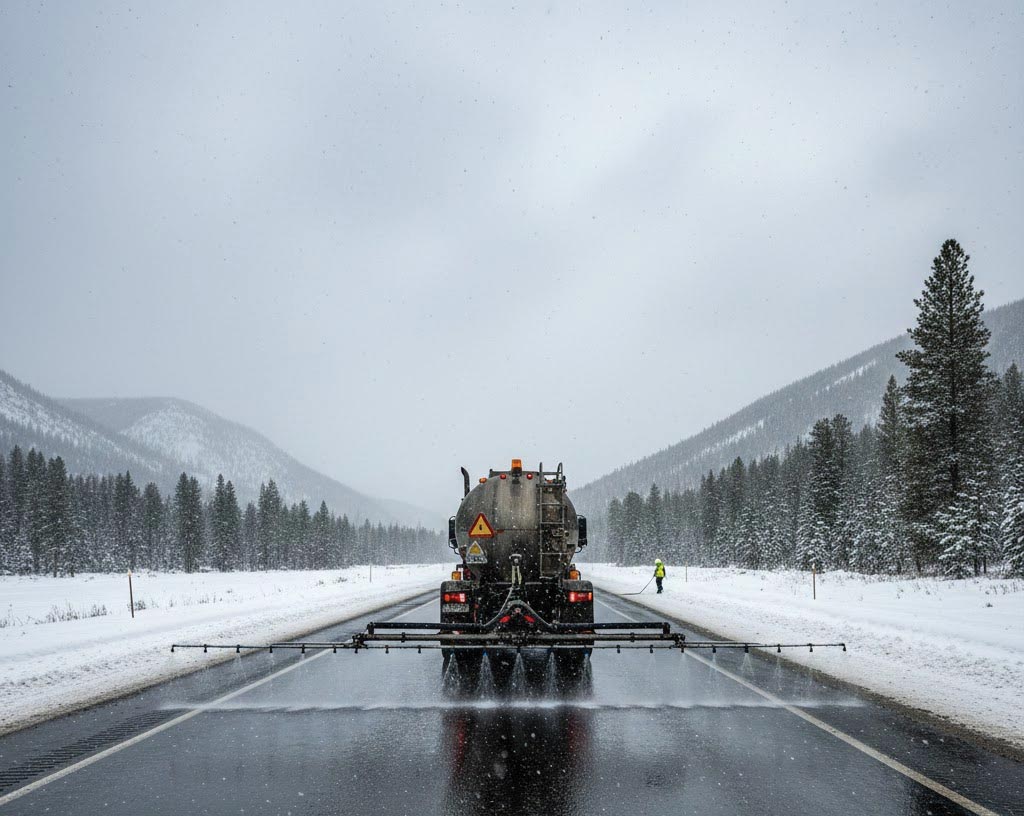
De-icing sections
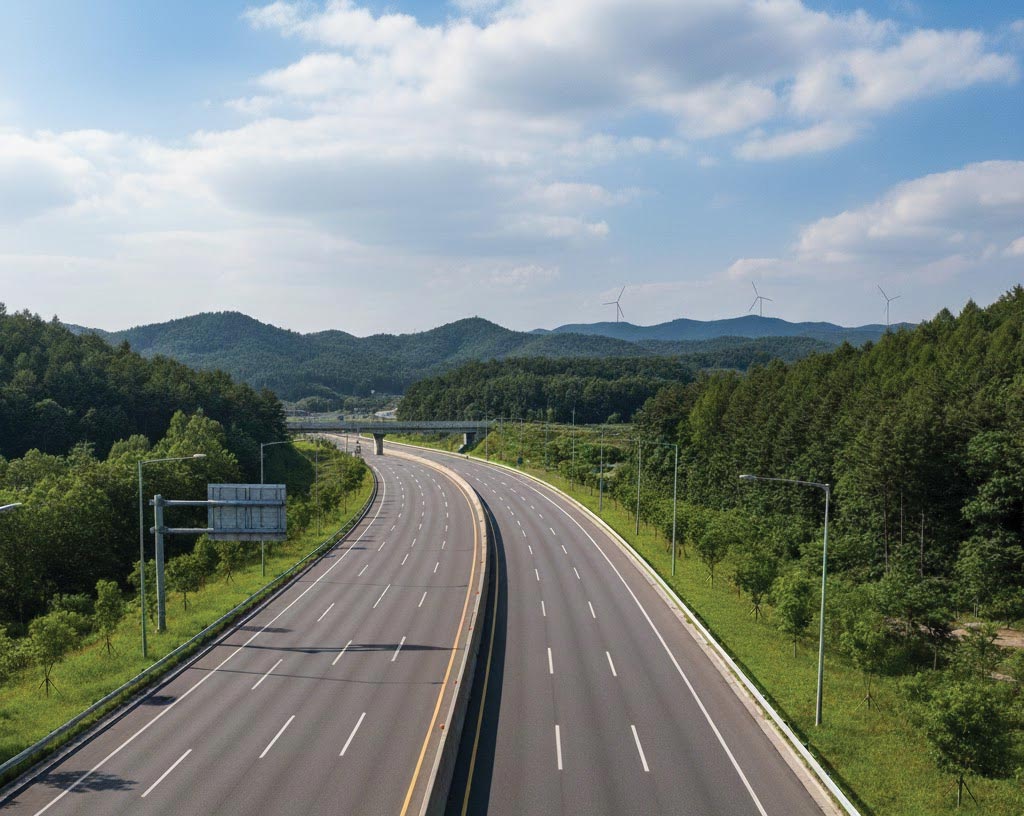
Expressways and national roads

Highway median / side barriers
Analysis of Practical Differences
2. Steel vs. GFRP Comparison Table
GFRP: Light, strong, and rust-free.
| Items | Steel Rebar | GFRP rebar |
|---|---|---|
|
Corrosion |
O |
X (Corrosion-free) |
|
Weight |
Heavy |
1/4 the weight |
|
Tensile Strength |
Medium |
2-3 times the strength |
|
Conductive |
Yes |
Non-conductive |
|
Lifespan |
Medium-term |
Long-term |
|
Maintenance |
Repeated repairs |
Reduced LCC |
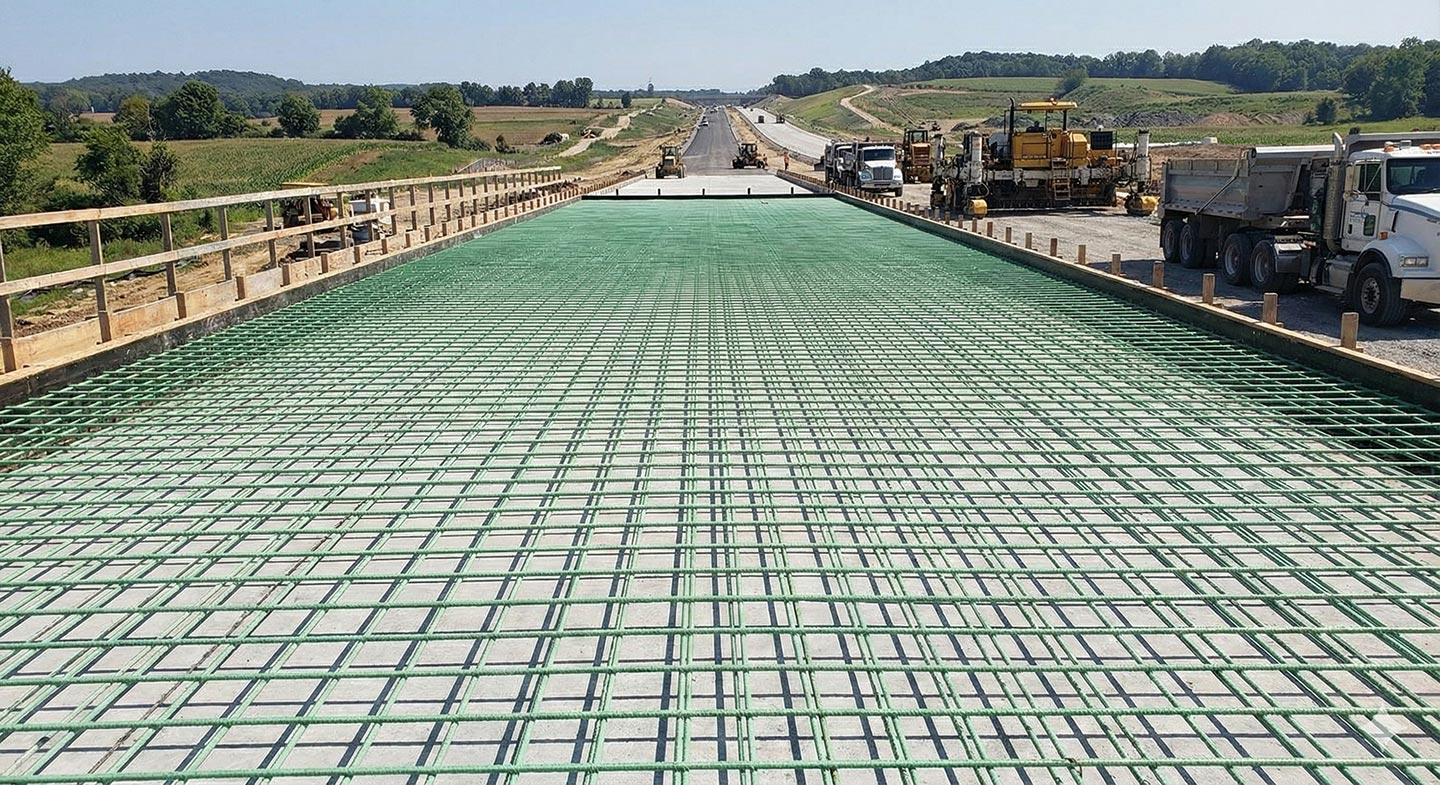
Highway construction site using epoxy GFRP
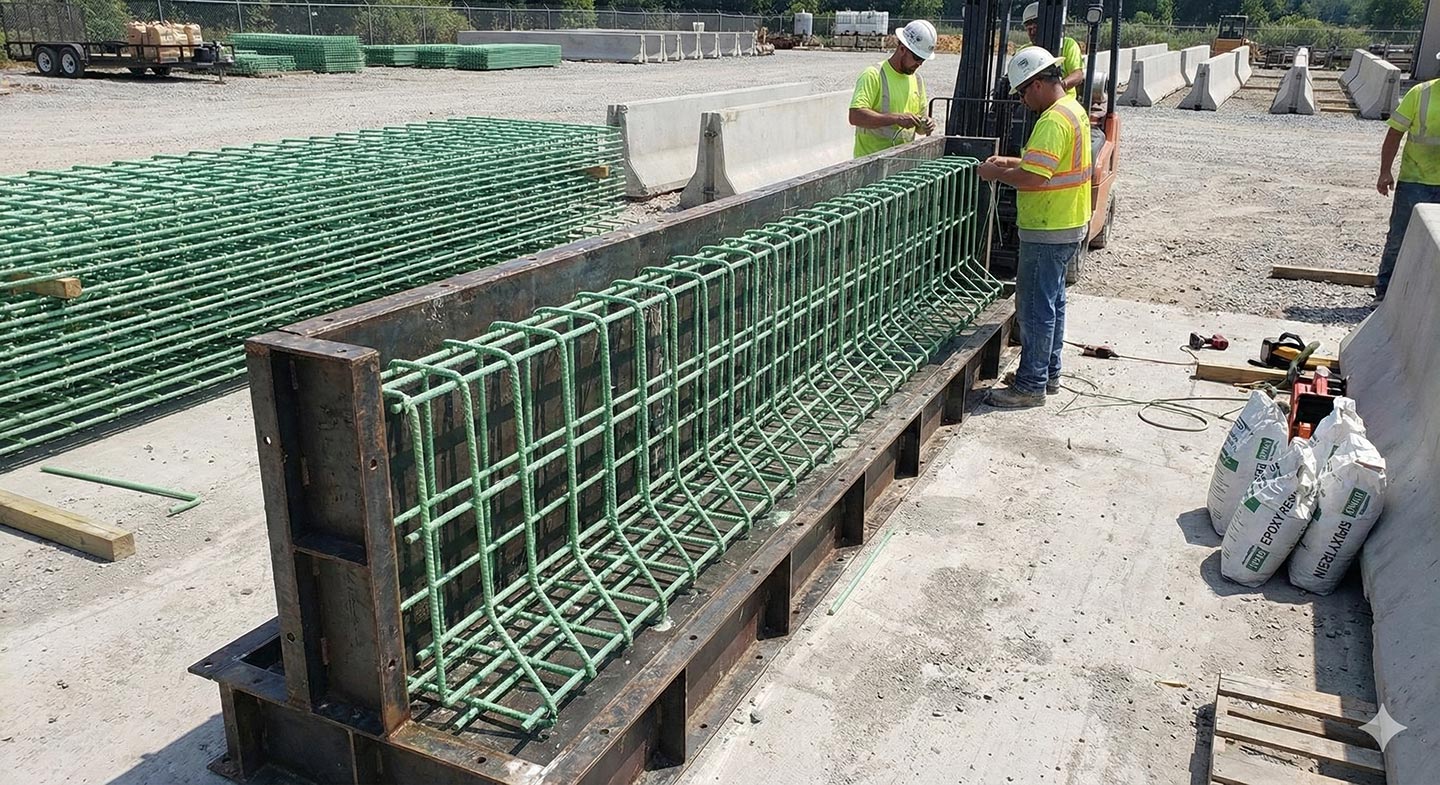
Highway median barrier constructed using epoxy GFRP

Construction of a road deck over a bridge pier
40%
Decrease20~40%
Life Cycle Maintenance
2X
Increase 1.5x~2x
Increased durability
100%
Eliminate 100%
Elimination of corrosion-preventing deterioration factors
Corrosion-free → Minimize maintenance → Maximize long-term stability